

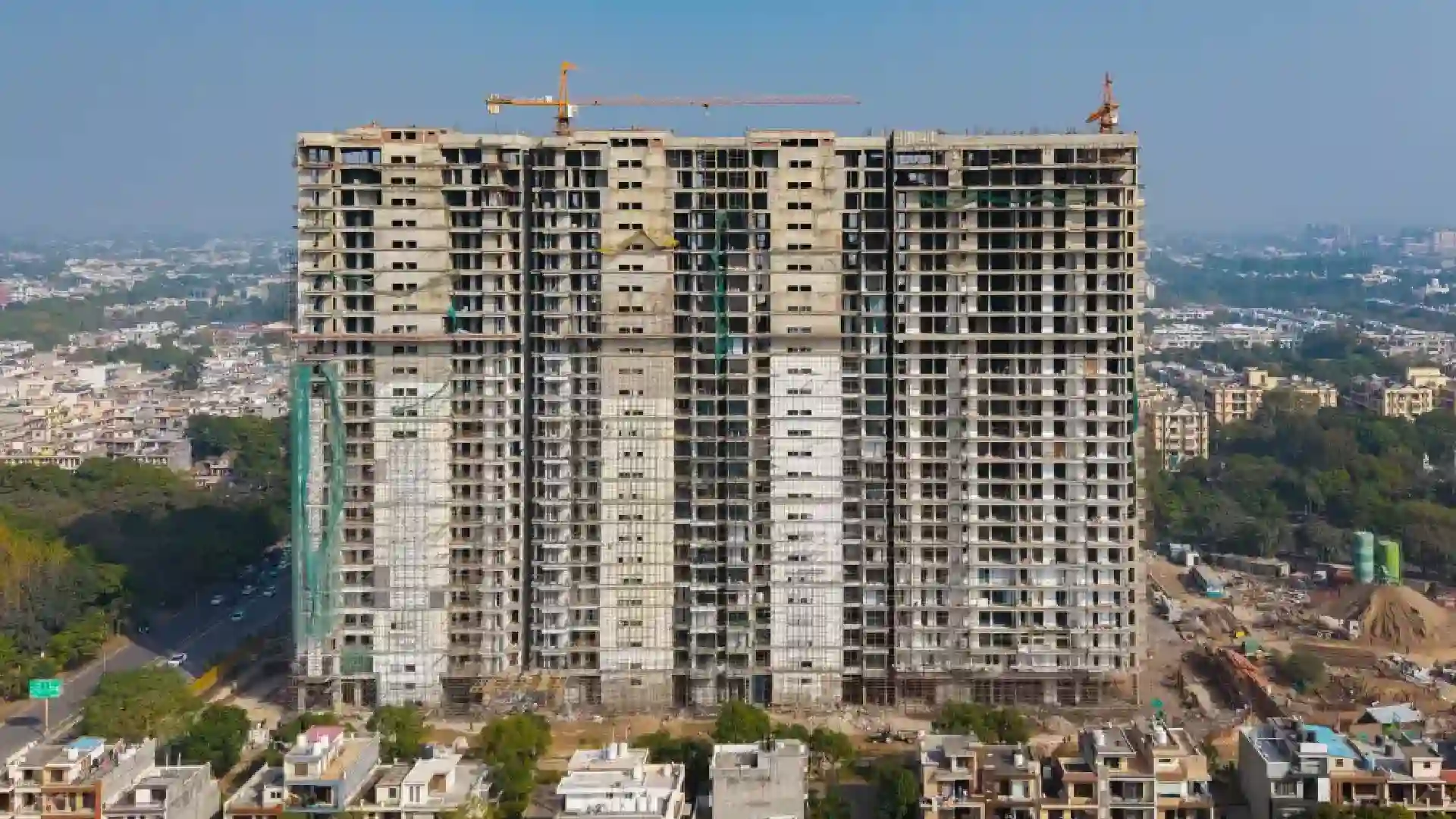
The Rise of Integrated Townships: Everything You Need in One Place

What buyers look for in a home has quietly changed. Size, price and location used to do most of the deciding. Now, convenience, safety, a sense of community and long-term resale strength weigh just as heavily. That shift is a big reason why one particular category of Indian real estate has taken off: the integrated township. 

Homeland Regalia is a useful case study here. It shows how far the category has travelled.  From a handful of shared facilities bolted onto a residential block, to something closer to a complete lifestyle, built around dozens of amenities and around how people actually spend their days, not just where they sleep at night. 

Knowing what genuinely qualifies as an “integrated” township,  and what’s worth checking before signing on,  puts any buyer in a stronger position, no matter which city they’re house-hunting in.

Distinguishing an Integrated Township From an Ordinary Housing Project

Think of an integrated township as a residential community built to be self-sufficient ,  the essentials, the recreation, the everyday leisure, all inside its own boundary, so residents aren’t constantly driving out for things a neighbourhood should already have. That usually means: 

  • Landscaped open spaces and dedicated recreation zones
  • Sports and fitness facilities beyond a basic gym
  • Round-the-clock security and access control
  • Proximity to schools, hospitals, retail and business hubs
  • Common areas designed for social interaction, not just passage

A standalone apartment block might tick a few of these boxes. Rarely does it have this range of lifestyle infrastructure baked into the master plan from the outset , and that’s usually where the difference shows up.

How Should Buyers Truly Evaluate a Modern Residential Community?

Calling a project a “township” doesn’t make it one. A few practical checks tend to separate genuine modern residential community planning from brochure language: 

  • Amenity depth vs. amenity count: A long list of facilities doesn’t mean much if it’s spread thin across thousands of units. Worth asking how amenities are actually distributed across towers and phases. 
  • Design credentials: Who designed it? Who handled the landscaping? What does their earlier work actually look like? 
  • Regulatory transparency: A project’s RERA registration should be verified independently, cross-checked on the relevant state RERA portal, not taken on trust.
  • Connectivity beyond the brochure: Actual drive times to work, school and hospital matter more than the straight-line distance a marketing map might show.
A Closer Look at What Ninety-Plus Curated Amenities Can Mean

Here’s where an average project and a genuinely well-planned one start to look quite different. At Homeland Regalia, that depth shows up across three areas, indulgence, wellness and fitness, and community, covering infinity-edge pools, private theatres, yoga sanctuaries and dedicated sports courts, along with co-working lounges, banquet halls and guest suites. Then there’s tennis and pickleball, an indoor air-conditioned basketball court, cricket and soccer simulators, and play zones for children split between indoor and outdoor. Put it all together and the point becomes obvious: it’s depth, not the raw number on a list, that actually separates one project from another.

Why Does Sustainable Design Matter for Long-Term Livability?

Sustainability in a township isn’t only about being environmentally conscious ,  it shapes running costs, upkeep and how well a place holds up over the years. Buyers looking into sustainable living should check for: 

  • Genuine green cover and landscaped open space, not token planting
  • Water management systems such as rainwater harvesting
  • Energy-efficient common-area infrastructure
  • A green-building consultant involvement from the design stage, rather than added later.

None of this is obvious on a site visit. A few years in ,  badly planned green infrastructure tends to wear out fast, while developments built with this thinking from the start tend to age far better.

Can Thoughtful Community Design Genuinely Shape Family Life?

The amenity list matters less than how those spaces get used, day after day. Neighbourhoods that are designed as family-friendly neighborhoods tend to share a few traits: play areas that parents can actually see from the walkways, a balance of active and quiet zones so toddlers and retirees aren’t competing for the same bench, and social spaces that give people an actual reason to run into each other, rather than living stacked in a building as strangers. 

This is also where something interesting happens. The privacy of a well-designed home meets the familiarity of a neighbourhood where people actually know one another. Modern living and old-school community life, at the same address.

Weighing an Integrated Township as a Long-Term Real Estate Investment

Well-planned townships generally have an edge over standalone projects when it comes to investment value, though that’s not automatic, and it depends heavily on execution and location. What tends to move the real estate investment needle: 

  • Location relative to upcoming infrastructure (new roads, metro lines, business districts)
  • The developer’s execution track record on prior projects
  • Whether amenities are delivered as promised, not just marketed
  • Professional post-handover management, since poorly maintained common areas erode value over time

As with any big purchase, claims are worth checking independently, RERA filings, a visit to a developer’s earlier finished projects if that’s possible, a conversation with people already living there. None of it should be taken purely on a brochure’s word.

Choosing the Integrated Township That Genuinely Fits Your Life

Not every township suits every buyer. Someone starting out in their career, working mostly from a laptop, cares about co-working space and connectivity in a way a joint family looking for children’s play areas and multi-generational common spaces simply doesn’t. Before committing, it helps to list out the amenities you’d actually use on a regular week, rather than being won over by an impressive total. 

The category keeps growing because it answers a real problem: bringing work, recreation, safety and community within reasonable reach of home, all at once. That’s the promise developments like Homeland Regalia are built around, not a checklist of features, but a genuinely considered address for people who know what they’re looking for.

Complete the Form to Proceed with Download

scan-whatsapp.webp

you will hear from us shortly